I use GitHub Daily Trending a lot, but I kept running into the same limitation: it tells me which repositories are getting attention, but not what is actually inside them.
A repo might be tagged as Python while still containing a meaningful amount of TypeScript, Shell, Jupyter Notebook, Dockerfile, or template code. If I am scanning trending repos for ideas, stack patterns, or implementation details, that missing context matters.
So I built Tech Radar.
The Gap
What I wanted from GitHub Trending was simple:
- A fast way to see which languages are really showing up across the current trending set
- A way to inspect the actual language mix of a repository instead of trusting the primary tag
- A visual summary that makes cross-repo comparison easy
GitHub Trending does not provide that view, so Tech Radar does.
What Tech Radar Does
It crawls trending repositories, enriches them with GitHub language breakdowns, and turns that data into a dashboard that is much easier to scan.
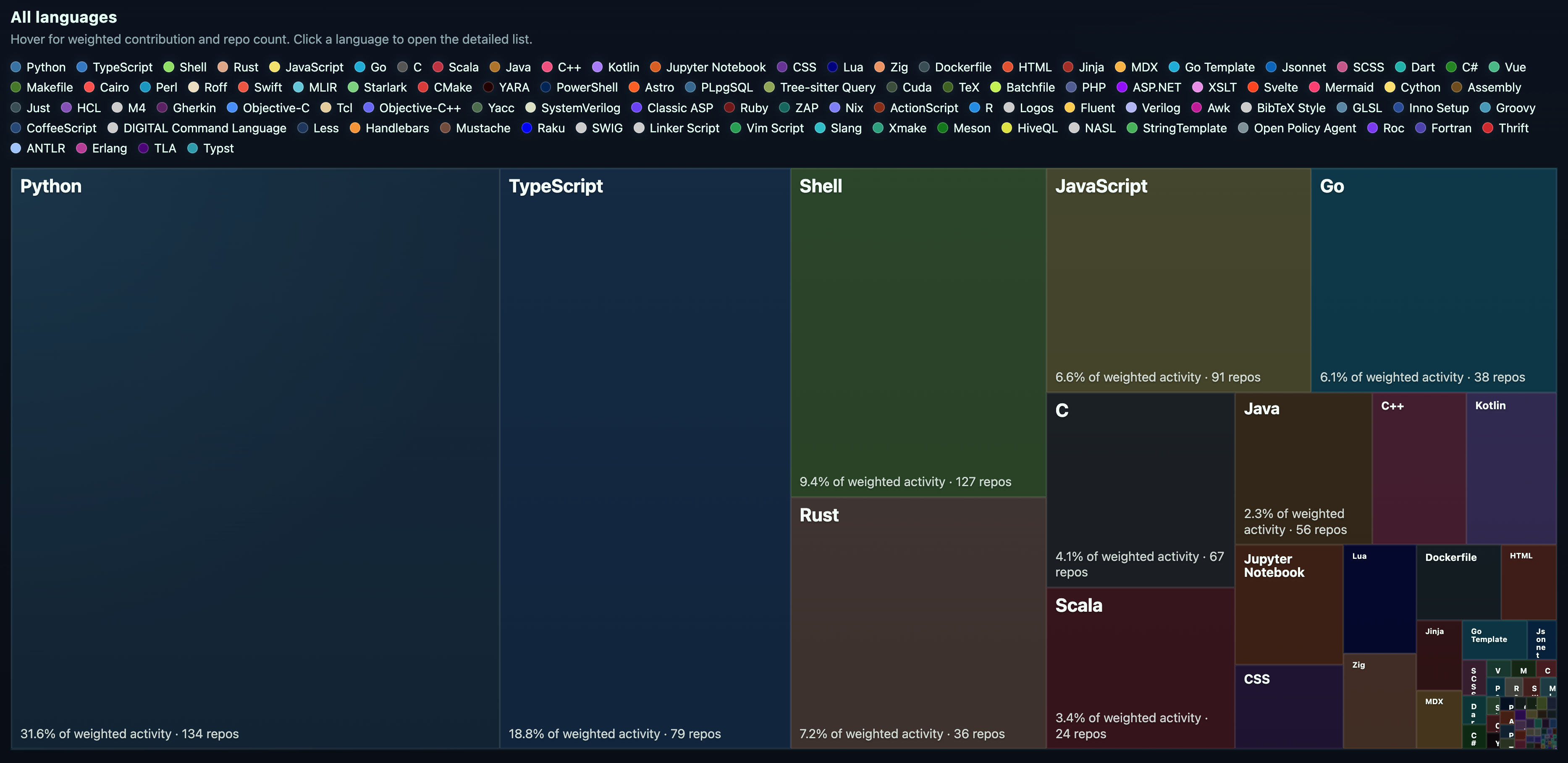
The main view is a treemap where each language tile is sized by weighted contribution across the latest trending snapshot. That makes it easy to spot not just the dominant primary languages, but also the supporting languages that keep showing up underneath them.
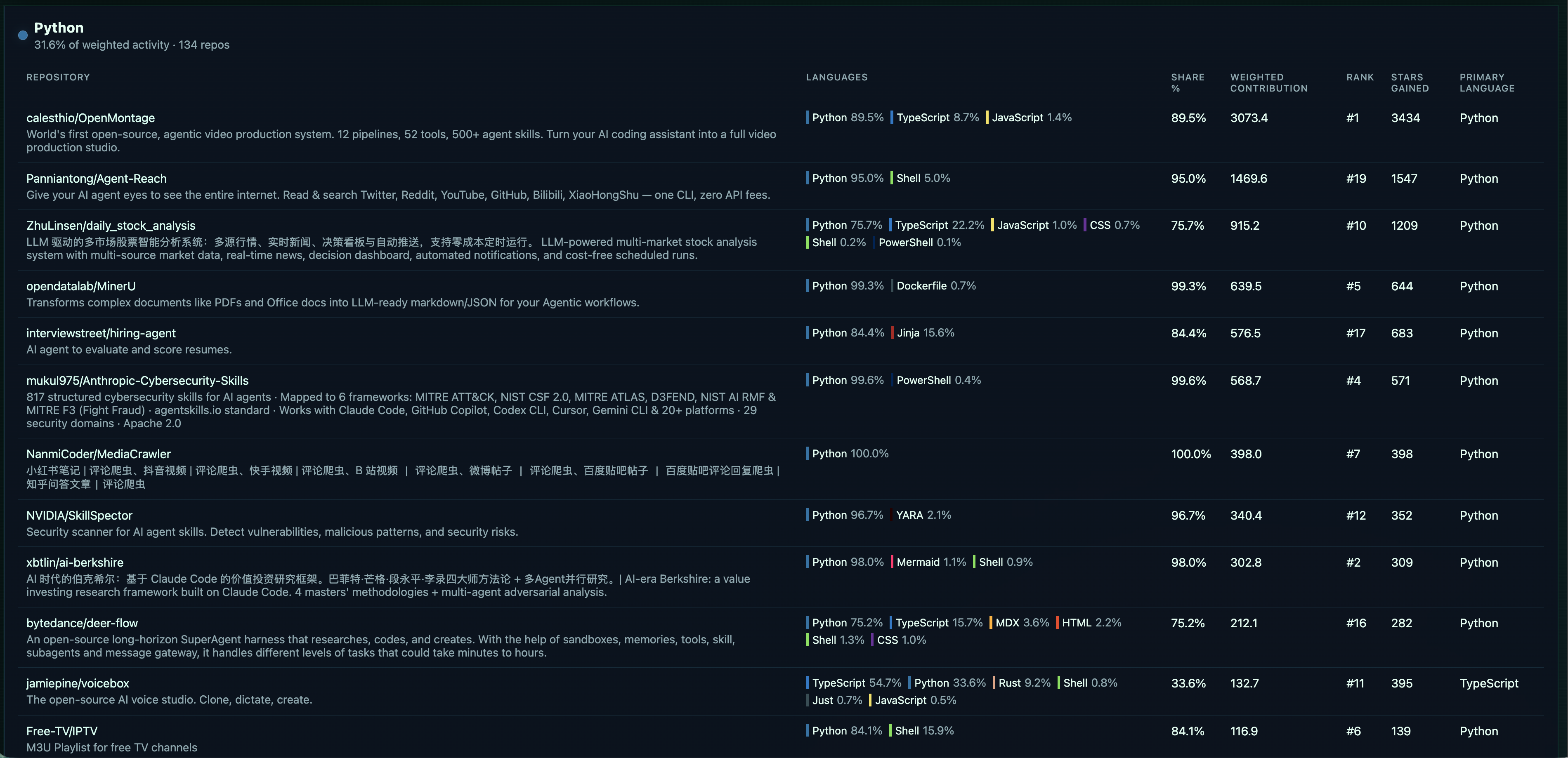
From there, clicking a language opens a detail page with the repositories contributing to it, their language percentages, ranking, and stars gained. That is the part I find most useful in practice because it answers a more concrete question: which repos are actually driving this language right now?
Why I Built It
This was mainly a utility project for myself.
I wanted something faster than manually opening ten trending repositories just to figure out whether a project was really Python, mostly TypeScript with a thin Python wrapper, or quietly held together by Shell, Dockerfile, and notebook-heavy glue code.
This gives me that answer in one place. It turns GitHub Trending from a list of hot repos into a clearer map of the stacks behind them.